
JUMP TO
In this article, I write about the “Dark Night of the Soul,” a transformative phase often experienced in our 30s and 40s. Rooted in psychology, this life period involves confronting old beliefs and seeking deeper creativity and meaning.
While it comes with feelings of emptiness, it also serves as a catalyst for creativity and personal growth. I will explore its nuances and supportive practices that can guide you toward a more authentic self and unlock your creative potential.
A Confusing Life Phase
The experience commonly known as the “Dark Night of the Soul” is not something negative or pathological, but rather a phase of psychological maturity.
Many people experience it most intensely during their 30s or 40s, when inner growth begins to outpace old identities and life structures.
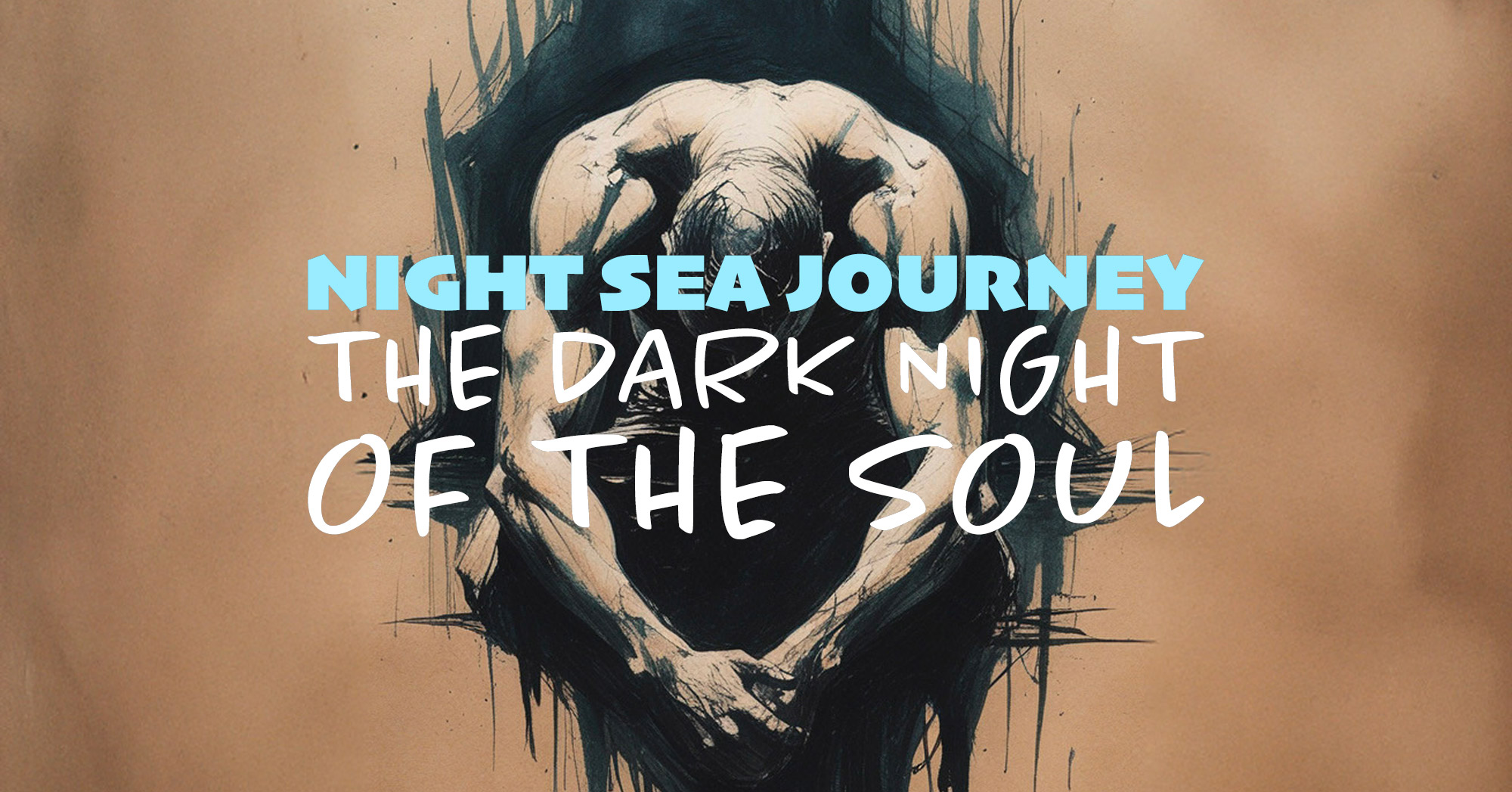
In Jungian psychology, this phase is closely associated with individuation, the confrontation with the shadow; what Carl Jung also describes it as a “night sea journey.” It marks a period when the psyche calls for deeper meanings, authenticity, and integration.
According to these perspectives, the Dark Night of the Soul occurs when our inner self begins to outgrow old identities. It is not caused by failure but by inner evolution. Unfortunately, the majority of people will resist this inner transformational phase.
In simple terms:
- The life that once “worked” no longer feels aligned
- Old goals, relationships, or values lose meaning
- The inner self begins asking deeper questions about purpose
But a lot of confusion and discomfort arises during this period; because your ego structure—the old identity—are dissolving, while the new one has not yet fully formed.
What Often Happens in the 30s
In mindfulness language, this is the moment when the soul begins to gently but persistently call the personality into alignment. It marks a transition from the external life to the internal one.
Your 30s are a threshold decade for many because:
- The personality has largely been formed.
- Social roles are established (career, relationships, ego identity)
- The inner question arises: “Is this truly me?”
Psychologically, this phase aligns with:
- Existential questioning
- Identity restructuring
- Meaning crises
- Reevaluation of values and life direction
In practical terms, the ego strategies that once worked stop working. Achievement no longer brings fulfillment, and the psyche begins to demand a deeper orientation. Carl Jung emphasized that this is not pathology, but a personal developmental necessity.
For example, Carl Jung observed that many of his patients came to him in their 30s with feelings of emptiness, anxiety, or loss of direction—often regardless of outward success. He famously noted:
We cannot live the afternoon of life according to the program of life’s morning. – Carl Jung
Achievements vs Meaning. Between Morning of Life and Afternoon of Life
Jung’s concept of the “morning” and “afternoon” of life illustrates the transition from a focus on external achievements to a deeper exploration of the self and the search for meaning.
Morning of Life
The morning of life, typically associated with youth and early adulthood, focuses on external achievements such as career, education, and relationships.
During this phase, individuals work on building their identity, often driven by societal expectations and personal goals. It is a time of exploration and growth, where people seek to understand their place in the world through various experiences.
Afternoon of Life
In contrast, the afternoon of life, which begins in midlife, emphasizes inner reflection and the search for deeper meaning. Individuals start to question their life choices and focus on integrating different aspects of the self, a process Jung called individuation.
This phase prioritizes personal growth, spirituality, and meaningful relationships, as people seek to understand their true purpose and contribute to their communities.
How the Dark Night of the Soul Feels. Emptiness and Emotional Heaviness
The “Dark Night of the Soul” is a term often used to describe a profound emotional crisis or transformative experience that can feel similar to depression but is fundamentally different in nature.
While it may involve feelings of emptiness and emotional heaviness, it is not classified as a mental health disorder. Instead, it is characterized by a deep inner yearning for truth, authenticity, and meaning, even when one feels lost or confused.
Common Experiences are:
- Emotional Heaviness: Individuals may experience a pervasive sense of emotional weight without any identifiable external triggers, leading to feelings of sadness or even despair.
- Loss of Motivation: There is often a noticeable decline in motivation for previously cherished goals or pursuits, as individuals reassess what truly matters to them.
- Disconnection: People may feel a sense of disconnection from themselves, others, or their career beliefs, leading to feelings of isolation and loneliness.
- Increased Sensitivity: Heightened sensitivity and introspection are common, as individuals become more aware of their thoughts and emotions, often leading to deeper self-reflection.
- Desire for Solitude: A longing for solitude or stillness may arise, as individuals seek more space to process their experiences and emotions away from external distractions.
Overall, the Dark Night of the Soul is a challenging yet potentially transformative experience. It encourages you to confront and change struggles and habits: to seek a deeper understanding of themselves and their place in the world.
Purpose of the Dark Night. Early-Mid Adulthood Transition
But remember, not everyone experiences this transition at the same age. Some encounter it multiple times at deeper levels; others delay it until later in life. Jung believed that this phase comes when the individual is strong enough to integrate it, even if it does not feel that way.
The Dark Night of the Soul serves a transformative purpose:
- Releasing outdated beliefs, emotional patterns, and ego identities
- Clearing unresolved emotional imprints from earlier life
- Strengthening inner authority and discernment
- Shifting from fear-based motivation to soul-aligned intention
- Developmental psychology and identity reorganization
- Meaning-making processes
It is best understood as a refinement process. This is not a breakdown. But you have to work on your own life values, not to be ignored and forced by the old.
You are not losing yourself. You are shedding what you are not.
What Helps During This Phase
The teachings around the Dark Night of the Soul emphasize the importance of allowing the process to unfold naturally, cautioning against the urge to seek clarity or resolution too quickly.
This “darkness” is often likened to a womb space, symbolizing a period of gestation and transformation rather than a final destination. It is a time for deep inner work and reflection. Here growth can occur in the midst of uncertainty.
Supportive Practices:
- Self-Compassion and Patience: Cultivating self-compassion and practicing patience with oneself is crucial during this time, as it allows individuals to honor their feelings without judgment.
- Time in Silence or Nature: Spending time in silence or immersing oneself in nature can provide a calming environment that fosters introspection and connection to the present moment.
- Creative Expression: Engaging in creative activities such as art, writing, or movement can serve as a powerful outlet for emotions, helping individuals process their experiences and express their thoughts.
- Releasing the Need for External Validation: Letting go of the desire for approval or validation from others encourages individuals to trust their own journey and insights, fostering a sense of autonomy.
- Trusting Intuition: Emphasizing the importance of trusting one’s intuition allows individuals to navigate their inner landscape with confidence, guiding them toward authenticity.
These practices can help you navigate the complexities of life; it facilitates a deeper understanding and ultimately leading to personal growth.
Why Creative Blocks Often Break During This Phase
Creative blocks usually arise from excessive self-monitoring. These blocks are rarely caused by a lack of talent. More often, they come from fear, over-control, pressure, or the need for approval.
During individuation your old structures begin to weaken. The process can be uncomfortable, but it is also deeply liberating.
Creative blocks are often driven by thoughts such as:
- “Is this good enough?”
- “How will this be received?”
- “Does this fit my identity?”
During the dark night:
- The old identity loses authority
- External validation matters less
- Control gives way to necessity
This creates psychological conditions in which expression becomes more important than performance—a key requirement for creative flow.
Art as Self-Regulation: When Creativity Becomes Essential
Creative blocks dissolve because creativity is no longer optional. It shifts from performance to survival, from approval to truth. Instead of asking, “Is this right?”, you may ask yourself, “Is this true?”. Perfectionism loosens. The work does not need to be finished, explained, or approved—it just needs to be honest. That honesty is what breaks the cycle of stagnation.
During this phase, creativity often becomes a form of self-regulation:
- A way to process confusion
- A way to process contradictions
- A way to move through uncertainty
From a neuroscience perspective, creativity is understood as a complex interplay of various brain networks that facilitate the generation of novel ideas and solutions.
Research indicates that creative thinking involves the activation of both the default mode network (DMN) and the executive control network (ECN). The DMN is associated with spontaneous thought processes, daydreaming, and the generation of ideas, while the ECN is responsible for focused attention and decision-making.
This dual activation allows you to explore imaginative possibilities while also evaluating and refining old ideas.
Plus, creativity’s tied to neuroplasticity, is your brain’s ability to rewire itself by making new connections, and boosts problem-solving and adaptability.
Therefore, creativity serves as a vital mechanism for self-regulation, enabling individuals to express emotions, cope with challenges, and foster personal growth through innovative thinking.
Takeaway: Time to Know Yourself
Maturity in the 30s leads you to deep introspection and self-discovery, often referred to as the Dark Night of the Soul. This period can bring feelings of emptiness and emotional weight as you wrestle with your identity, choices, and the search for meaning.
It’s common in this stage to feel disconnected from past goals, prompting a serious reevaluation of life direction.
Yet, this tough phase can also spark creativity. As you face inner struggles and embrace the darkness, you’ll often discover new avenues for creative expression.
That heavy feeling can ignite amazing creativity, allowing you to share your stories through art, writing, dance, or music.
Transitioning from emptiness to creativity shows how much you can grow during hard times, ultimately leading to a more authentic and fulfilling life.
My Related Articles
- Article: From the Old to the New version of Yourself. 5-Tips to Change your Habits.
I explore the process of change, emphasizing the importance of shifting our daily habits to align with our true selves. By understanding the nature of habits, we can transition from the old version of ourselves to a renewed, more authentic existence. - Article: Working hard on yourself. Become your own observer.
I write about how working hard on ourselves means harmonizing the multiple parts of human nature: the mental frameworks, the emotional needs, and the heart’s whispers. It’s all about how we think and feel about ourselves internally. - Article: Creativity, Creative Mind and the Source of Creativity
Creativity is both a skill and a mindset you can build through practice. I also talk about how stress blocks creativity, but awareness exercises help in regaining it. And I explain how simple things, like observing nature, can unlock your creative side.
My Training Programs
- Mindset Training: A Self-Empowerment Journey A personal development course designed for those who want more from life — clarity, balance, and a genuine inner strength.
- Creative Digital Art: 1-on-1 Coaching In my coaching, I focus on demonstrating both the creative and technical workflows and emphasize the iterative process of refining and improving ideas.
Recommended Books
- Neuroscience: Changing the Habit of Being Yourself by Joe Dispenza
- Psychology: The Modern Man in Search of a Soul by Carl Jung
- Spirituality: The Power of Now by Eckhart Tolle